
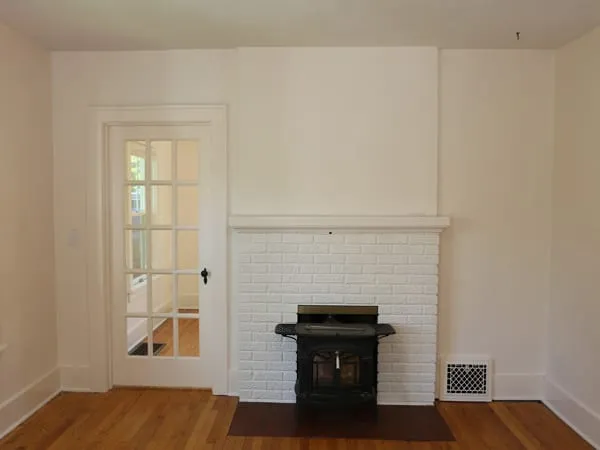
Key Points
- You can safely paint a brick fireplace if the masonry is solid, clean, and dry; always leave the firebox unpainted unless using high-heat coatings.
- Proper prep includes deep cleaning with TSP, repairing mortar cracks, applying bonding primer, and using latex masonry paint for a smooth, lasting finish.
- Painted brick fireplaces need regular dusting, seasonal cleaning, and touch-ups every 5–7 years to maintain appearance and protect against soot or moisture damage.
Dated Brick, Meet Fresh Paint
Is your old brick fireplace dragging down your living room’s style?
Thinking about painting it, but not sure where to start—or if it’s even a good idea?
This guide will walk you through everything you need to know about painting a brick fireplace the right way, from proper prep and product choices to application tips and style upgrades.
By the end, you’ll know how to get a clean, updated look that lasts, without damaging your brick or wasting time on the wrong materials.
If you want help turning your tired fireplace into a cozy, modern focal point, call Tribble Painting Company or fill out the contact form—we’d love to bring your interior painting vision to life.
Can You Paint a Brick Fireplace? Here’s the Fast Answer

Painting a brick fireplace is perfectly safe—and surprisingly straightforward—when the masonry is solid and properly cleaned.
If you’re hoping to paint a brick fireplace in your Ann Arbor home, keep these basics in mind:
- Sound structure only: Skip painting if the bricks crumble at a touch, mortar flakes away, or moisture seeps through the joints.
- Firebox stays bare: The interior firebox reaches high heat, so leave that area unpainted unless you purchase specialty high‑heat coatings.
- Prep is everything: A clean surface free of soot, dust, and mineral residue is critical for long‑term adhesion on porous surfaces.
- Expect a few coats: Raw masonry absorbs paint; plan on primer plus at least one, often two, finish coats for full, even color.
If your hearth meets these conditions, painting a brick fireplace can refresh the whole room with relatively little effort and cost.
Tools and Materials Checklist
Having the right tools on hand makes painting brick fireplace projects faster and cleaner, especially when you want to modernize an outdated fireplace without turning your entire living space into a job site.
Cleaning & Prep
- Stiff wire brush or nylon scrubber to loosen soot and dirt
- Vacuum with a hose attachment to remove debris from mortar joints
- Mild soap, water, or trisodium phosphate (TSP) for a deep clean
- Drop cloths to protect floors and nearby walls
- Painter’s tape for crisp edges along mantel, trim, and adjoining surfaces
- Heat‑resistant caulk for small mortar fixes and hairline gaps
Priming & Painting
- Bonding or masonry primer to seal brick and block stains
- High‑quality latex or specialty masonry paint in eggshell or subtle semi‑gloss finish
- 2‑inch angled brush for mortar lines and corners
- Mini roller (⅜‑nap) or standard roller for broad faces
- Optional whitewash kit: interior white paint, water, and sponge for a washed effect
- Ladder or sturdy step stool if the fireplace reaches ceiling height
Gathering these supplies before you begin will help you apply paint smoothly, avoid messes, and give your painted fireplace a durable, bright new life.
Step‑by‑Step: How to Paint a Brick Fireplace

Step 1: Clean the Brick — Prep Like a Pro
- Sweep away loose soot with a wire brush, then vacuum crevices.
- Mix warm water and a small amount of trisodium phosphate for a deep clean that cuts smoke stains.
- Rinse well and let the brick fireplace dry completely—moisture trapped in porous surfaces causes peeling later.
Step 2: Repair Cracks and Gaps
- Check mortar lines for crumbling joints; fill with heat‑resistant caulk or mortar patch.
- Smooth the patch with a damp sponge and let it cure. This prevents hairline cracks from showing through your new paint color.
Step 3: Protect Surroundings
- Spread a drop cloth over the hearth and floor; tape off the mantel, trim, and nearby walls.
- A little plastic sheeting saves your entire room from rogue drips—an especially helpful tip if you’re tackling an outdated fireplace next to carpet.
Step 4: Apply Primer
- Roll on a masonry primer to seal soot stains and help finish coats grip the rough surface.
- Brush into grooves first, then roll outward for an even coat.
- Allow at least two hours of dry time before you begin painting.
Step 5: Paint the Brick
- Use high‑quality latex masonry paint in your chosen shade; eggshell or subtle gloss hides irregularities yet wipes clean.
- Brush the joints and edges, then roller the faces for quick coverage.
- Plan on a few coats—raw brick drinks in the first layer, so don’t worry if one coat looks light.
Step 6: Apply a Second Coat (If Needed)
- Once the first layer is dry to the touch, inspect for dark spots.
- Add a second coat only where the original red brick still bleeds through.
- Light touch‑ups yield a uniform, bright finish and avoid a thick, plastic look.
Step 7: Let It Cure
- Keep fireplace doors open and fans off; dust can cling to fresh-painted brick.
- Wait 5–7 days before lighting a fire—heat too soon can blister the new coating.
Optional Finish: Whitewash or Limewash
- Mix equal parts white paint and water; stir until smooth.
- Dab the thin slurry onto the fireplace with a sponge, then wipe back for a washed, farmhouse vibe.
- A soft, translucent coat mutes dark clay tones without hiding texture—a quick way to create a modern focal point while still showcasing the character of historic brick.
Follow the link to view an in-depth tutorial about how to whitewash brick.
Fireplace Painting Tips and Style Ideas
- Choose the best paint sheen for function: eggshell hides uneven brick texture while semi‑gloss wipes clean after winter soot.
- Test a small patch on an inconspicuous area before you fully apply paint—brick absorbs color differently than drywall.
- Break up an all‑white painted fireplace with a rustic wood mantel or sleek floating shelf; this contrast adds warmth to a modern Ann Arbor room.
- Use painter’s caulk where the hearth meets the floor for a crisp line and to keep ash from settling in gaps.
- Create an accent wall in the same palette family to make your refreshed brick fireplace feel intentional, not an afterthought.
- Helpful tip: if you love a natural wash, try sponging off a small amount of wet paint to reveal hints of clay tones beneath—it softens bold colors and adds depth.
Maintenance After Painting
- Dust the surface weekly with a dry cloth; a quick deep clean every season keeps soot from dulling your paint color.
- Spot‑wash with gentle soap and water; avoid abrasive pads that can scratch fresh-painted brick.
- Check for hairline cracks in mortar each fall—seal promptly to stop moisture from lifting the finish.
- If smoke stains appear, lightly scrub with a damp sponge and mild cleaner, then touch up with the same color.
- Plan on a refresher coat every five to seven years; one roller pass is often enough, thanks to the sealed primer layer beneath.
- Keep decor like plants or candles an inch from the bricks so trapped heat or wax doesn’t stain or blister the fireplace finish.
DIY vs. Hiring a Pro
DIY is doable when…
- Your brick fireplace has a smooth, solid surface with minimal repairs needed—perfect for a weekend do‑it‑yourself project.
- You already own drop cloths, rollers, and a quality brush set, keeping costs low.
- You’re comfortable taking time to clean, prime, and carefully apply paint—even if that means a second coat for perfect coverage.
Call a professional when…
- The masonry shows cracks, crumbling mortar, or stubborn soot that won’t budge; a pro has specialty cleaners and tuck‑pointing skills.
- You want a specialty finish (limewash, two‑tone, or high‑contrast mantel accents) but don’t have the tools to get crisp edges.
- A tall fireplace reaches crown molding or high walls—ladders, staging, and dust control are safer in experienced hands.
- You’d rather skip the prep mess; a team arrives with commercial vacuums, drop cloths, and the best paint products (think high‑build masonry primers from Sherwin‑Williams) for a flawless, long‑lasting result.
A quick chat with a local contractor can confirm whether DIY or hiring out makes the most sense for your Ann Arbor room and budget.
Frequently Asked Questions
Is painting a brick fireplace a good idea?
Yes—if the masonry fireplace is structurally sound, painting brick fireplace surfaces can brighten the whole room and cost far less than refacing.
What kind of paint do you use on a brick fireplace?
Use a bonding or masonry primer plus a heat‑rated, latex masonry paint; these formulas flex with temperature swings and resist peeling.
What is the downside of painting brick?
Once you apply paint, you’ll need to maintain it every few years; also, painted brick can’t be stripped back to the same color easily, so commit to the new look.
These answers help you decide whether to pick up the roller or call a pro for your next painting brick fireplace makeover.
Transform Your Fireplace the Right Way with Tribble Painting Company
Painting a brick fireplace is one of the easiest ways to bring instant warmth and style to your living space.
With the right prep, tools, and technique, even the most outdated hearth can become a stunning centerpiece.
Whether you’re aiming for modern minimalism or cozy charm, a clean coat of paint gives you full creative control.
If you’d rather skip the mess and get flawless results, the house painters at Tribble Painting Company are ready to handle your interior painting project with expert care.


